Starter Guide to EMDR Therapy in Texas: Cost, Process, and What to Expect

If you are considering Eye Movement Desensitization and Reprocessing (EMDR) therapy in Texas, you likely have questions about how it works, what it costs, and whether it’s the right fit for your needs.
This guide answers the most frequently asked questions about EMDR therapy across Texas—from understanding the process to navigating insurance and virtual sessions.
What is EMDR Therapy and How Does It Work?
EMDR (Eye Movement Desensitization and Reprocessing) is an evidence-based psychotherapy designed to help the brain process and heal from distressing memories, trauma, anxiety, and adverse life experiences.
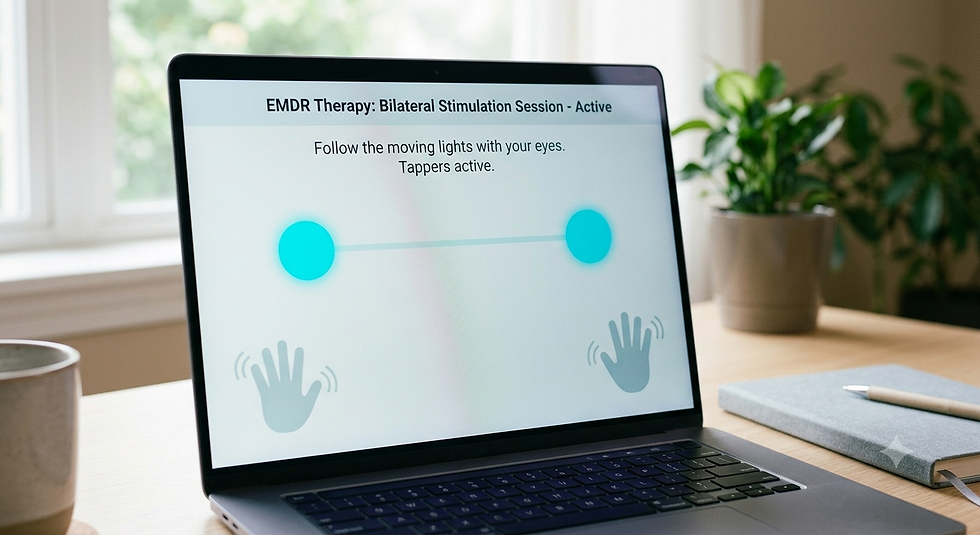
Unlike traditional talk therapy, which focuses on analyzing thoughts and feelings, EMDR utilizes bilateral stimulation (typically side-to-side eye movements, auditory tones, or tactile taps). This process helps unlock stuck memories and allows the brain’s natural healing mechanism to reprocess them, changing how the memory is stored emotionally and cognitively.
Do I Need to Have PTSD to Do EMDR Therapy?
No, you do not need a formal diagnosis of PTSD to benefit from EMDR.
While EMDR is widely recognized as a primary treatment for Post-Traumatic Stress Disorder (PTSD), it is equally effective for a broad range of experiences, including:
Single-event traumas (accidents, medical events, natural disasters)
Relational or childhood trauma ("little 't'" traumas)
Anxiety, panic attacks, and phobias
Chronic stress, burnout, and perfectionism
Grief, loss, and difficult life transitions
How Much Does EMDR Therapy Cost in Texas?
The cost of EMDR therapy in Texas varies based on location, therapist specialization, and session length.
Standard Private Pay Rates in Texas
On average, private pay rates for specialized EMDR sessions in major Texas metro areas range between $150 and $300 per session. Extended sessions (75 to 90 minutes) or intensive formats may carry higher fees.
Insurance and Out-of-Network Coverage
In-Network: If your therapist is in-network with your health insurance provider, your out-of-pocket expense will typically be your plan’s copay or coinsurance (often $20–$60 per session).
Out-of-Network: Many specialized EMDR therapists operate as private-pay (out-of-network) providers. In these cases, you can request a monthly statement called a Superbill to submit to your insurance company for potential out-of-network reimbursement.
Does Insurance Cover EMDR Therapy in Texas?
Yes, most insurance plans cover EMDR therapy, provided it is delivered by a licensed mental health clinician treating a diagnosed clinical condition.
Insurance companies process EMDR using standard mental health CPT billing codes, most commonly:
CPT Code 90837: 60-minute individual psychotherapy
CPT Code 90834: 45-minute individual psychotherapy
Tip: Before starting therapy, contact your insurance provider and ask: "Does my plan cover out-of-network outpatient mental health under CPT code 90837?"
Can You Do EMDR Therapy Online in Texas?
Yes, virtual EMDR therapy is safe, highly effective, and widely practiced across Texas.
Through secure, HIPAA-compliant telehealth platforms, therapists use specialized software for visual bilateral stimulation (such as moving lights on screen) or alternative auditory/tactile methods. As long as your therapist is fully licensed in the state of Texas, they can legally provide online EMDR therapy to anyone residing anywhere in the state.
How Many Sessions of EMDR Will I Need?
The length of treatment varies depending on whether you are working through a single traumatic event or complex, long-standing trauma.
Trauma Type | Description | Estimated Session Range |
Single-Event Trauma | A single isolated incident (e.g., a car accident or specific medical event). | 6 to 12 sessions |
Complex Trauma | Ongoing, multi-layered trauma (e.g., childhood neglect, chronic abuse, long-term relational distress). | 3 to 12+ months of ongoing care |
What Happens During an EMDR Session?
EMDR therapy is a structured 8-phase treatment. It does not jump straight into processing painful memories on day one.
History & Treatment Planning: Identifying specific targets and goals.
Preparation & Resourcing: Learning grounding techniques and emotional coping skills.
Assessment: Identifying the specific memory, negative belief, and bodily sensations.
Desensitization: Using bilateral stimulation to process the memory.
Installation: Strengthening a positive, adaptive belief to replace the negative one.
Body Scan: Checking for lingering physical tension related to the memory.
Closure: Returning to full stability before the session ends.
Reevaluation: Reviewing progress at the start of the next session.
Will EMDR Make Me Feel Worse Before I Feel Better?
It is common to experience mild emotional fatigue, vivid dreams, or heightened emotional awareness between early EMDR sessions. This is often referred to as an "EMDR hangover" and indicates that your brain is actively processing information.
Because safety and regulation are core components of the 8-phase protocol, your therapist will equip you with grounding tools in Phase 2 to ensure you feel contained and supported throughout the entire therapeutic process.
You don’t have to navigate trauma or burnout alone. At Journey EMDR, we offer compassionate, evidence-based therapy—online throughout Texas—tailored to your unique experience.
Ready to take the next step?



Comments